Feb 15, 2026 · 15 min read
How to Learn RF Engineering
An opinionated reading list and learning path for RF and satellite communications engineering — filtered through 11 years of actually doing it.
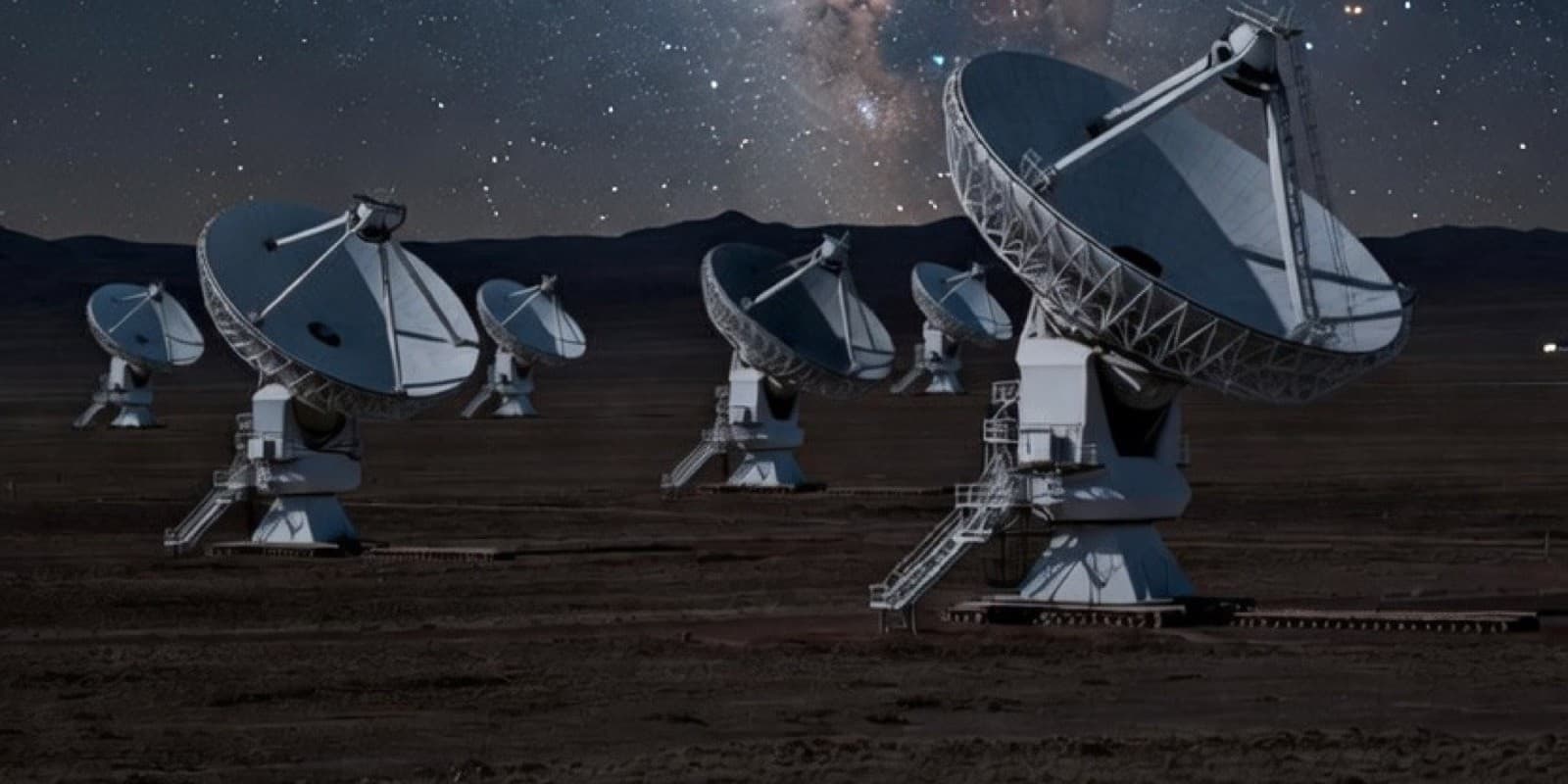
There's a GitHub repo called How to learn modern electronics that lists hundreds of books across every electronics discipline. It's comprehensive. It's also overwhelming.
I've been an RF systems engineer for 11+ years at Viasat, working on Ka, Ku, V, and X-band satellite communications. This is my filtered version: the books, tools, and resources that actually matter if you want to do RF engineering for satellite communications. Not everything — the right things, in the right order.
The Foundation: You Can't Skip This
Before you touch RF, you need circuit analysis and electromagnetics. There's no shortcut.
Circuit Analysis
Fundamentals of Electric Circuits by Alexander & Sadiku is the standard. Read it. Work the problems. Don't skip AC analysis — phasors and impedance are the language of RF.
If you want free alternatives, James Fiore's DC and AC Electrical Circuit Analysis books are excellent and Creative Commons. The accompanying videos are surprisingly good.
Electromagnetics
This is where most people bail. Don't.
Electromagnetics Explained by Ron Schmitt is the gentlest on-ramp I've found. It's written for practicing engineers, not professors. It connects Maxwell's equations to things you actually care about: transmission lines, radiation, shielding.
After that, you'll eventually need Pozar. But not yet.
The RF Core: Where the Real Learning Starts
Start Here
Practical Electronics for Inventors by Scherz & Monk is an underrated entry point. The RF chapters are brief but well-contextualized. It shows you where RF fits in the bigger electronics picture.
The ARRL Handbook is surprisingly deep. Yes, it's aimed at ham radio operators. But the chapters on transmitters, receivers, propagation, and antenna design are practical in a way that textbooks often aren't. The supplemental digital files are worth the price alone.
Go Deeper
The Art of Electronics by Horowitz & Hill. Chapter 13 (RF) alone is worth the book. The companion x Chapters has additional RF material that's hard to find elsewhere. This is the book that teaches you intuition, not just equations.
RF & Microwave Engineering
Now Pozar.
Microwave Engineering by David Pozar is the industry bible. Every RF engineer I know has a copy within arm's reach. S-parameters, Smith charts, matching networks, filter design, amplifier stability — it's all here. Dense but correct.
RF Microelectronics by Behzad Razavi covers the IC side: mixers, oscillators, PLLs, receiver architectures. Essential if you work on transceiver design or need to understand what's inside the chips you're specifying.
Michael Steer's Microwave and RF Design series (5 volumes) is free under Creative Commons. The quality rivals paid textbooks. Start with Volume 1 (Radio Systems) for the big picture, then Volume 2 (Transmission Lines) and Volume 3 (Networks) for the math you need daily.
RF Circuit Design by Christopher Bowick is thin, practical, and gets you designing faster than any other book on this list. Good for when you need to build something, not just analyze it.
Satellite Communications: The System View
This is where things get specific to what I do.
Link Budgets
A link budget is the single most important analysis in satellite communications. It answers: "Can this signal close?"
There's no single perfect book for this. You learn link budgets by doing them. But the theory comes from:
- Satellite Communications Systems Engineering by Ippolito — the atmospheric propagation chapters (rain fade, gaseous attenuation) are essential for Ka-band and above
- Satellite Communications by Timothy Pratt — good system-level treatment
- The ITU-R P-series recommendations (P.618, P.676, P.838) for the actual models used in practice
I've built my own tools for this in Rust: linkbudget handles the full chain from transmitter through propagation to receiver, including modulation, BER, coding gain, and sensitivity.
Signal Chain Design
Cascaded gain, noise figure, IP3 — the Friis equation and its extensions are your daily bread.
- Microwave Engineering (Pozar) Chapter 12 covers amplifier design and noise
- RF Microelectronics (Razavi) for receiver chain analysis
- High Linearity RF Amplifier Design by Kenington for when you need to understand compression, AM-AM, AM-PM, and predistortion
I built gainlineup because I got tired of doing this in spreadsheets. It cascades gain, noise figure, P1dB, IP3, SFDR, dynamic range, and generates AM-AM compression curves.
Antenna Design
Antenna Theory: Analysis and Design by Balanis is the definitive reference. Heavy on math, but you need it for phased arrays.
Practical Antenna Handbook by Carr & Hippisley is the hands-on complement.
For phased array work specifically:
- Phased Array Antenna Handbook by Mailloux — the bible for array design
- ITU-R S.465 and S.1528 for reference radiation patterns used in regulatory filings
S-Parameters
You'll spend a lot of time staring at S-parameter data. Understanding what you're looking at matters.
I built touchstone for parsing and cascading S-parameter files. If you're doing any RF measurement work, you'll deal with Touchstone (.s2p) files constantly.
Digital Communications: The Other Half
Modern satellite links are digital. You need to understand modulation, coding, and error rates.
Digital Communications by Proakis & Salehi is the classic. Dense but comprehensive.
Software Receiver Design by Johnson, Sethares & Klein takes a different approach — build a receiver in software, step by step. Excellent for developing intuition about what's happening to your signal.
The DVB-S2 standard (ETSI EN 302 307) is worth reading directly if you work on broadcast or broadband satellite. It's well-written for a standard and shows how modulation, coding, and framing fit together in a real system.
DSP
You'll need some DSP. Not as much as a signal processing engineer, but enough.
The Scientist & Engineer's Guide to Digital Signal Processing by Steven Smith is free online and is the best first book on DSP I've read. Clear writing, practical focus.
Understanding Digital Signal Processing by Richard Lyons is the standard second book. More rigorous, covers multirate and spectral analysis well.
Tools of the Trade
Simulation
The industry runs on licensed tools: ADS (Keysight), AWR (Cadence), HFSS (Ansys), MATLAB. They're expensive ($3K to $50K per seat) and powerful.
For personal work and open-source alternatives:
- Rust — I write analysis tools in Rust. It's fast, correct, and the type system catches unit errors that spreadsheets silently propagate. My published crates: rfconversions, touchstone, gainlineup, linkbudget
- Python (NumPy/SciPy/Matplotlib) — still the fastest path from idea to plot. I use it for Monte Carlo simulations and BER waterfall charts
- Qucs-S — open-source circuit simulator, good for quick RF matching network checks
- OpenEMS — open-source electromagnetic simulator (FDTD), surprisingly capable for antenna work
Measurement
- Network analyzers (VNA) — if you can get access to one, learn to use it. S-parameters go from abstract to real the first time you measure an actual filter.
- Spectrum analyzers — understanding what you're seeing on a spectrum analyzer is 80% of RF debug
PCB Design
RF PCB layout is its own discipline.
Signal Integrity Issues and Printed Circuit Board Design by Douglas Brooks is the practical starting point.
High Speed Digital Design by Howard Johnson is technically about digital, but transmission line effects don't care what your signal looks like. Essential for anything above a few hundred MHz.
KiCad is free and increasingly capable for RF work. Dr. Peter Dalmaris's KiCad Like a Pro is a solid guide.
The Learning Path I'd Recommend
If I were starting over, here's the order:
- Circuit analysis — Alexander & Sadiku, or Fiore's free books. 3–4 months.
- Electronics intuition — Art of Electronics. Read it like a novel. 2–3 months.
- Electromagnetics — Ron Schmitt's book, then Pozar Chapters 1–5. 2–3 months.
- RF fundamentals — Pozar Chapters 6–12, Bowick for practical design. 3–4 months.
- Satellite systems — Ippolito + Pratt, link budget practice. 2–3 months.
- Digital comms — Proakis (selected chapters), DVB-S2 standard. 2–3 months.
- Antennas — Balanis (selected chapters), ITU patterns. 2–3 months.
- Build things — tools, simulations, measurements. Ongoing forever.
That's roughly 18–24 months to go from "I know Ohm's law" to "I can design a satellite ground station receive chain." It's a lot. But RF engineering is a lot.
What I Wish Someone Had Told Me
Spreadsheets are where RF analysis goes to die. They're fine for a quick sanity check. They're terrible for repeatable, version-controlled, unit-safe analysis. Write code instead.
The ITU recommendations are worth reading. They're the actual models used in practice. Academic textbooks simplify them. The real world doesn't.
Measure things. Theory is necessary but insufficient. The first time your amplifier oscillates at a frequency you didn't expect, you'll understand why RF engineers seem paranoid.
The system view matters more than any single discipline. An antenna engineer who doesn't understand link budgets, or a signal chain engineer who doesn't understand modulation, is only solving part of the problem. The best RF systems engineers see the whole picture.
That's the path. It's long, it's deep, and it never really ends. But the rabbit hole is worth it.
Ian Cleary is an RF Systems Engineer with 11+ years of experience in satellite communications. He publishes open-source RF analysis tools in Rust at crates.io.